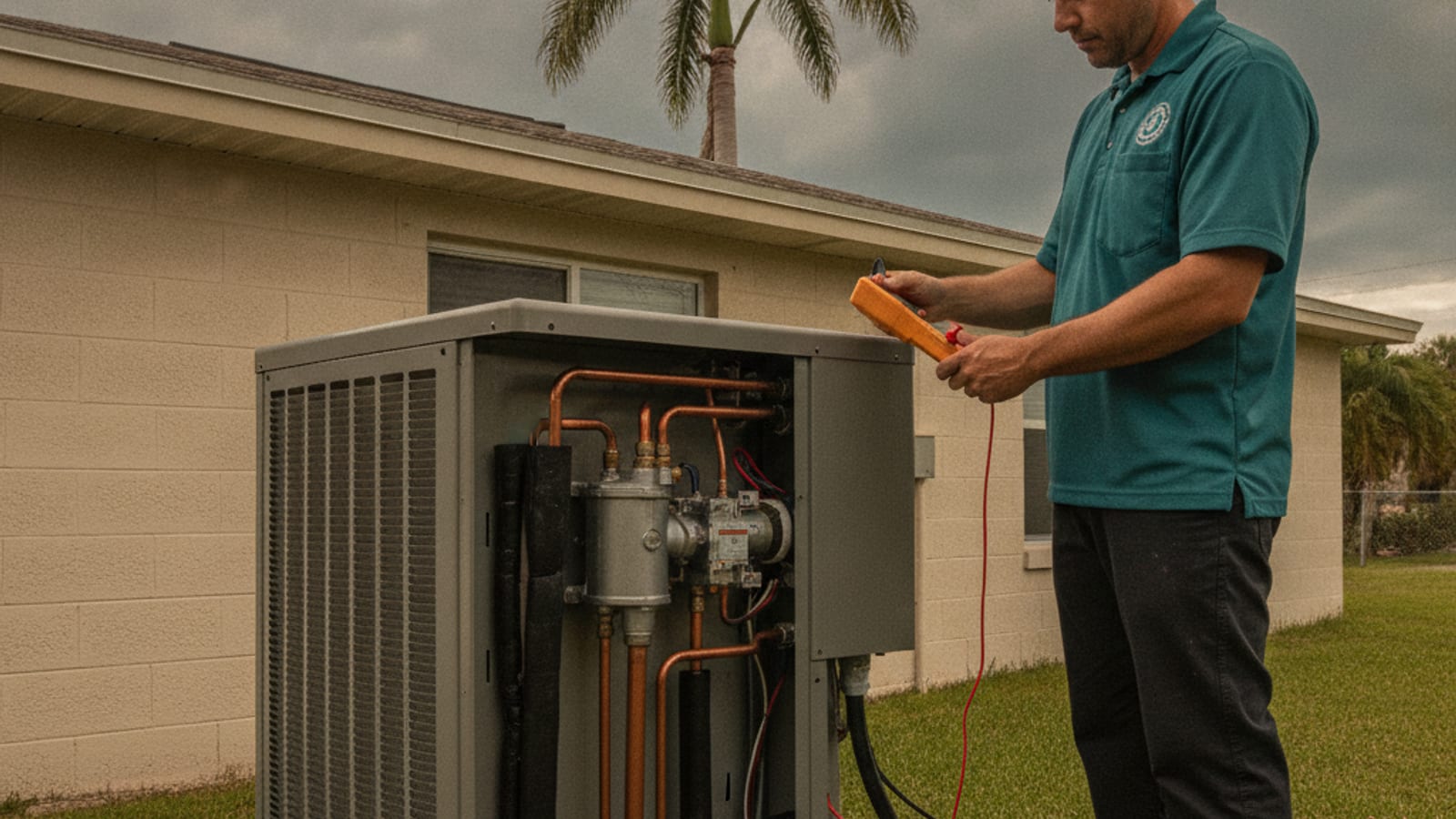
A heat pump cools your home like an air conditioner but can also provide heat. For most Englewood homes, that versatility makes a heat pump the stronger all-around choice.
Both systems can handle Gulf Coast cooling when properly sized and installed. The main difference appears during cooler weather. An air conditioner only cools, while a heat pump reverses its operation to warm the house.
How do heat pumps and air conditioners cool a home?
During cooling mode, heat pumps and central air conditioners work almost identically. Both move indoor heat outside rather than creating cold air.
Warm indoor air passes over a cold evaporator coil. Refrigerant absorbs heat from that air and carries it outdoors. The outdoor coil then releases the collected heat. Meanwhile, the blower circulates cooled air through the home.
Because their cooling process is so similar, neither system automatically delivers better comfort. Equipment condition, sizing, ductwork, airflow, and installation quality matter more than the label.
A well-matched air conditioner can cool an Englewood home effectively. So can a properly selected heat pump. If your current system struggles during hot afternoons, a licensed pro should inspect the whole setup before recommending replacement.
What happens when the weather turns cool?
A heat pump reverses the refrigeration cycle. It gathers heat from outdoor air and transfers that heat indoors. Even cool outdoor air contains usable thermal energy.
An air conditioner cannot reverse its cycle. Homes with central air need a separate heating source, often an electric furnace or another compatible system.
Englewood’s relatively mild winters suit heat pumps well. The system can cover everyday heating needs without relying entirely on electric resistance heat. During unusual cold spells, supplemental heat may assist the heat pump.
A heat pump uses a reversing valve to flip refrigerant flow between cooling and heating. An air conditioner has no reversing valve, so it cannot heat. On the handful of Englewood mornings that drop near freezing, backup electric strip heat covers the gap when the outdoor coil cannot pull enough warmth on its own. If the system cools all summer and then blows cold air in January, that is usually a heat-pump failure, not a missing furnace. See furnace repair in Englewood for that no-heat morning, and heat pump cost in Englewood for the published install and repair bands.
If your home already has a heat pump that isn’t switching modes correctly, the licensed HVAC pros we send can provide heat pump service and diagnose the underlying problem.
Which system uses less energy?
During summer, comparable heat pumps and air conditioners often use energy in similar ways. Efficiency depends on equipment design, system condition, thermostat settings, airflow, and the building itself.
The larger difference is usually heating. A heat pump transfers existing heat instead of producing all its warmth through electric resistance. That process can reduce heating energy use under suitable outdoor conditions.
Still, the equipment alone doesn’t determine your power bill. Leaky ducts can waste conditioned air in an attic or garage. Dirty coils restrict heat transfer. Clogged filters reduce airflow. Poor insulation also makes either system run longer.
Regular HVAC maintenance helps preserve airflow and heat transfer. It also gives a technician a chance to spot wear before peak cooling season.
Which system handles Englewood humidity better?
Either system can control humidity when correctly sized and configured. Moisture removal happens while warm indoor air crosses the cold evaporator coil. Water condenses on the coil and drains away.
Oversized equipment can cool rooms too quickly. The thermostat becomes satisfied before the system runs long enough to remove much moisture. That can leave the house cool but clammy.
This issue matters in Englewood, where humid Gulf air frequently enters through doors, windows, duct leaks, and building gaps. Good sizing supports longer, steadier cooling cycles and better moisture removal.
Variable airflow and thoughtful thermostat settings may improve comfort, but they cannot correct every sizing or duct problem. A licensed HVAC pro should evaluate indoor humidity alongside temperature, airflow, and operating time.
Does one system cost more to own?
The answer depends on the existing home and the complete installation. A heat pump may require different controls, electrical components, or supplemental heating arrangements. An air conditioner may make sense if an efficient, compatible heating system is already in place.
Long-term ownership also depends on maintenance and usage. Heat pumps operate during both cooling and heating seasons, so some components may accumulate more operating time. Air conditioners rest during winter, but their separate heating equipment carries its own service needs.
Before choosing, compare the complete comfort system rather than one outdoor unit. The licensed HVAC pros we send can assess equipment compatibility, duct condition, electrical capacity, drainage, and thermostat controls. Homeowners considering new equipment can also review their air conditioner installation options.
How should I choose between them?
Start with how your home is heated now. If you use inefficient electric resistance heat, a heat pump may offer a practical upgrade. If you already have a suitable heating system and only need cooling, an air conditioner may remain reasonable.
Next, consider comfort problems. Uneven temperatures could point to duct issues rather than failing equipment. High humidity may reflect oversizing, low airflow, or air leakage. Frequent cycling can involve controls, sizing, or mechanical trouble.
Finally, insist on a home-specific evaluation. Floor area matters, but so do ceiling height, windows, insulation, shade, air leakage, and duct layout. A careful load calculation gives a better answer than replacing equipment with the same nominal size.
Englewood Air Pro is a referral service, not the licensed contractor. We match homeowners in Sarasota and Charlotte counties with licensed HVAC pros who can inspect the home and explain suitable options.
Frequently asked questions
Is a heat pump the same as an air conditioner?
No. A heat pump and air conditioner cool in similar ways, but only the heat pump can reverse its cycle to provide heating.
Is a heat pump good for Englewood, Florida?
Yes. Heat pumps generally fit Englewood’s long cooling season and mild winter conditions. Proper sizing and installation remain essential.
Can a heat pump cool as well as central air?
Yes. A correctly sized heat pump can cool as effectively as a comparable central air conditioner. Installation quality and airflow strongly affect performance.
Does a heat pump replace both heating and cooling equipment?
Often, yes. A heat pump can provide both functions, though some homes need supplemental heat for colder conditions or specific comfort needs.
Should I replace a working air conditioner with a heat pump?
Not automatically. Its age, condition, efficiency, heating setup, and repair history should guide that decision. A licensed pro can compare the complete systems.
Call Englewood Air Pro at (941) 292-6250 to get matched with a licensed local HVAC pro.