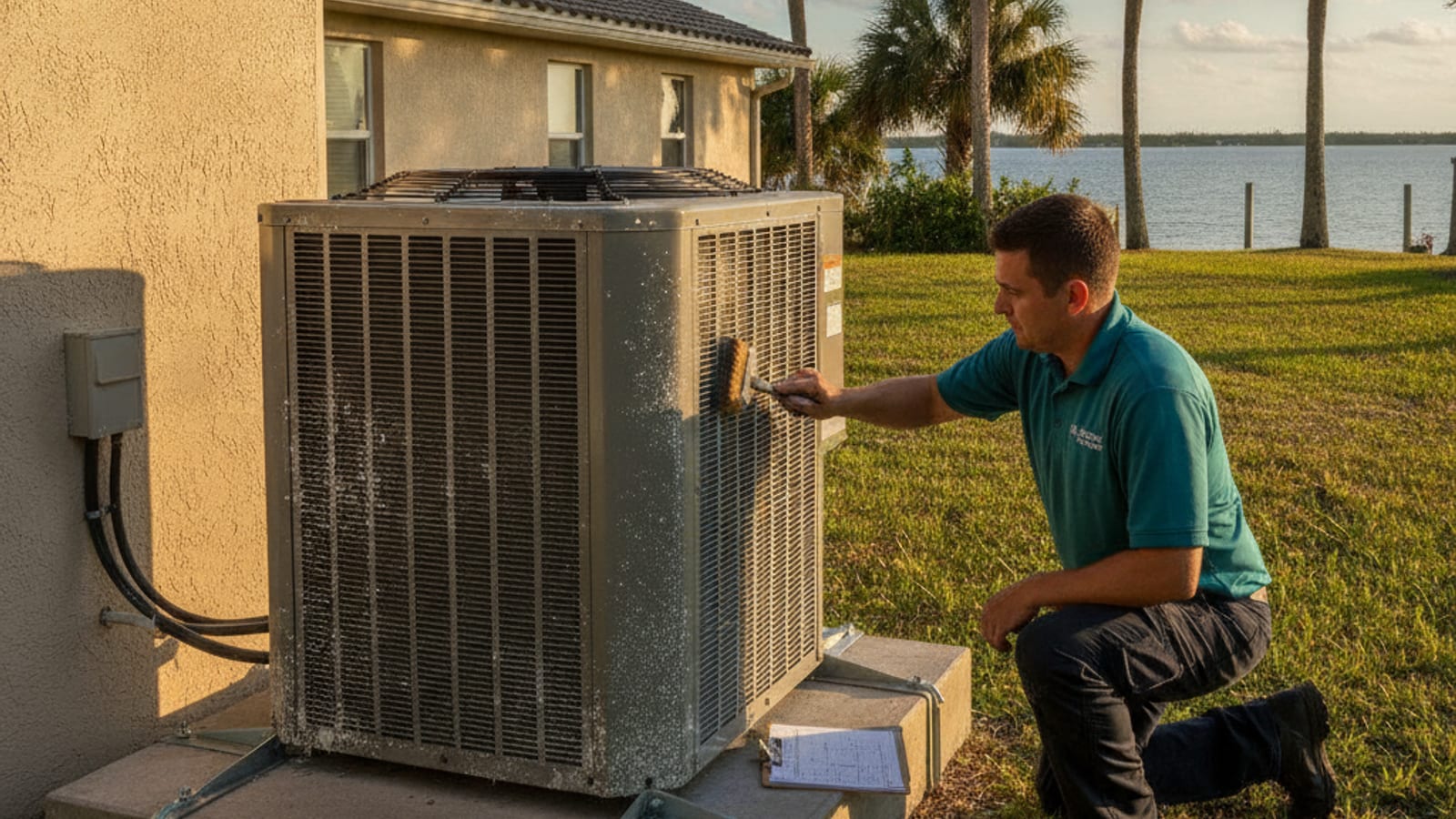
AC maintenance in Cape Haze costs $89 to $150 per visit, less on an annual plan. For homes on or near the water, that routine tune-up is especially important. Cape Haze sits right on Charlotte Harbor, which means your outdoor AC unit faces salt air, higher humidity, and the wear that comes with a nine-month cooling season on Florida’s Gulf coast.
Englewood Air Pro connects homeowners with the pros we send for AC tune-ups and maintenance across Charlotte and Sarasota counties, including the coastal communities around Cape Haze. Here’s what maintenance covers and why it matters more when salt air is part of the picture.
What maintenance covers in Cape Haze
A standard tune-up takes 60 to 90 minutes and includes a full system check: refrigerant charge measurement, condenser coil cleaning (critical in salt air), electrical connections and compressor amp draw, thermostat accuracy test, blower motor and airflow evaluation, indoor filter check or replacement, and a written report on any wear or parts showing age.
For Cape Haze homes, the technician pays special attention to corrosion on the condenser cabinet, coil fins, and electrical terminals. Salt spray corrodes these parts years faster than they wear inland. During maintenance, a tech will rinse coils with fresh water and check for surface corrosion or pitting on aluminum fins and copper tubing, which signals accelerated wear.
Why salt air makes maintenance more critical
Cape Haze’s location on Charlotte Harbor means your AC condenser is exposed to salt spray, especially on breezy days or after storms. Salt air corrodes aluminum coil fins and steel cabinet panels. Skip the rinse and inspection, and that corrosion has a longer run at the tubing and connections.
Spring maintenance before peak season catches corrosion while it’s still surface-level. A technician may recommend a protective coating on the cabinet or a sacrificial anode, a zinc bar bolted to the unit that corrodes in place of the AC’s copper and steel. Those are quote-time add-ons, not part of the $89 to $150 visit.
Humidity from the harbor also accelerates wear on motor bearings and electrical contacts inside the unit. The nine-month cooling season keeps the system running hard, which compounds the salt-air damage. Homes in the interior get more relief during winter, when systems shut down for longer stretches. Cape Haze rarely cools down enough to let equipment rest, so a spring visit is when the pro we send actually looks at the coil and the terminals.
When to schedule maintenance in Cape Haze
Spring, late March or early April, is the best time. Schedule before daily highs hit 90 degrees and before everyone else calls for service. A spring tune-up finds problems while the system’s been idle for a few months and parts are easy to swap.
If you want extra protection on the coast, schedule a second visit in November after heavy summer use. That fall check catches salt-air corrosion that accelerated over six months of heat and humidity, and it prepares the system for winter and any late-season storms.
After a hurricane or tropical storm, call for a quick inspection. Storm surge, salt spray, wind-blown sand, and power surges damage outdoor equipment, and brackish flood water can corrode internals faster than you’d expect.
Cape Haze maintenance costs
A single spring tune-up runs $89 to $150. Year-round cost is consistent, but scheduling matters. Book in spring or fall to avoid the peak-season wait. A summer appointment in July or August might mean waiting a week or more because emergency no-cool calls take priority. Book early for the slot you want.
If you schedule twice yearly (spring and fall), each visit is still $89 to $150. An annual maintenance plan is how the second visit usually costs less than booking each one separately.
Salt-air protection beyond the visit
During maintenance, a technician might recommend work that is not inside the $89 to $150 tune-up: a sacrificial anode on the cabinet, a protective coil coating, or moving the outdoor condenser farther from direct harbor spray. Ask for those as a separate written quote. For the visit itself, see what an AC tune-up costs in Englewood.
DIY checks between maintenance visits
Between professional tune-ups, look for signs that salt air is winning:
The condenser cabinet has visible white or green corrosion powder on the steel panels. That’s oxidation, and it accelerates.
Coil fins have a dull or pitted appearance instead of bright aluminum. That’s salt corrosion eating the surface.
Any spots of water pooling near the indoor unit, which means drainage is blocked, likely by algae or mold in the line.
A noticeable change in cooling power or a higher electric bill, which often signals restricted airflow or refrigerant loss.
Bring any of these up at your next maintenance visit, and the technician can focus the inspection on what you’ve noticed.
How maintenance earns the visit
The $89 to $150 spring tune-up catches problems while they are still small. Low refrigerant charge may not feel like a cooling failure yet. Capacitors or contactors drifting out of specification can be swapped before a no-cool emergency. Corrosion on electrical terminals can be cleaned and tightened as part of the visit. Coil fins blocked by salt spray residue get rinsed so the system can actually shed heat.
Most repairs after a diagnostic run $150 to $650. Emergency dispatch and diagnostic runs $200 to $450. The maintenance visit is how you stay off those calls in July.
Should you get maintenance in Cape Haze
Yes. The salt air makes it the difference between catching corrosion on the cabinet and finding out in August that the coil or the terminals have already failed. Inland homes can miss a year and often get by. Cape Haze homes that skip the rinse and the terminal check give salt air a free season at the equipment.
For homes closer to the water, consider twice-yearly maintenance. The extra visit is the same $89 to $150, less on a plan.
Englewood Air Pro connects you with local HVAC professionals for spring and fall maintenance across Cape Haze and Charlotte County. A tech will walk through what your system needs, explain any salt-air corrosion that’s starting, and give honest pricing with no pressure to replace today what can wait until next season.
For more on coastal AC care, see our guides to protecting AC from salt air and emergency post-storm AC checks. If the unit is already down, start with Cape Haze HVAC service.
Frequently asked questions
How often should I maintain my AC in Cape Haze?
Once yearly in spring is standard for inland homes. Cape Haze homes, especially those close to the water, benefit from a spring tune-up and often a second visit in November after heavy summer use. If your condenser is directly exposed to the harbor, consider twice-yearly maintenance to catch salt-air corrosion fast.
What does salt air do to an AC unit?
Salt spray corrodes aluminum coil fins, pits copper tubing, and eats steel cabinet panels. It also accelerates corrosion inside the unit on electrical terminals and contacts. Without maintenance, that wear shows up sooner on a harbor lot than it does inland.
Is a sacrificial anode worth it in Cape Haze?
If your home is within a mile of the water, ask the assigned pro to quote one. It is a separate add-on, not part of the $89 to $150 visit.
Can I do AC maintenance myself in Cape Haze?
Filter changes and visual checks, yes. Everything else requires a licensed Florida CAC contractor. Refrigerant work is illegal without certification, electrical diagnostics need proper tools, and a mistake turns a maintenance visit into a repair. Verify any contractor’s license at myfloridalicense.com.
How much does AC maintenance cost in Cape Haze?
$89 to $150 for a standard spring tune-up. Coastal homes sometimes add a fall visit at the same price, less on an annual plan.
Does salt air corrosion show up right away?
Not usually. Early corrosion is a white or green powder on the cabinet or dull pitting on the coil fins. A tech can see it during maintenance. By the time corrosion is obvious to a homeowner, internal damage is often already happening.
If your Cape Haze home needs maintenance, call (941) 292-6250 and we’ll connect you with a local HVAC pro who understands salt air and schedules quickly.