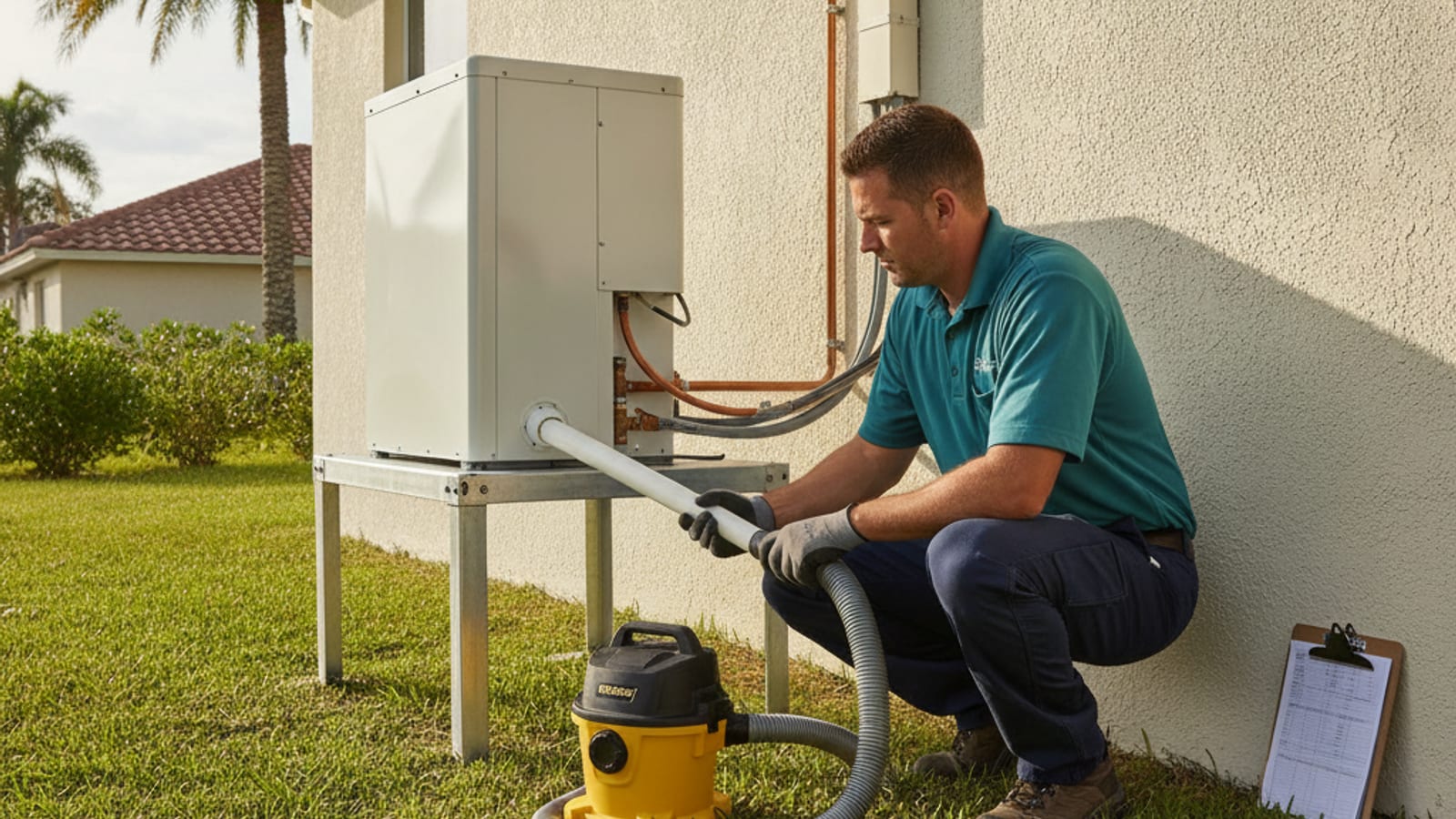
An AC tune-up in Englewood runs $89 to $150 per visit and takes 60 to 90 minutes on site. The price covers a full diagnostic, not just a filter change, including a capacitor check, coil cleaning, refrigerant verification, and a condensate drain flush. Scheduling it before the summer load hits, rather than after something breaks, is what actually makes the cost worth it.
Englewood Air Pro connects Sarasota and Charlotte county homeowners with local HVAC pros for AC tune-ups, priced as a single flat visit rather than a menu of upsells, with 24/7 emergency service available if the tune-up turns up something urgent.
What does an AC tune-up cost in Englewood?
A tune-up runs $89 to $150 per visit regardless of system size or whether it’s a straight AC unit or a heat pump, covering a capacitor microfarad reading, refrigerant charge and superheat check, condenser coil wash, blower motor amp draw check, and a condensate drain flush. That’s the same range whether you book it as a standalone visit or as part of an ongoing HVAC maintenance plan, which typically covers two visits a year at a modest discount over booking each one separately.
Why does the tune-up focus so much on the capacitor?
Because it’s the single most common point of failure in Englewood AC systems. A capacitor’s microfarad rating drifts gradually until the compressor can’t start under a hot afternoon load. Catching that drift with an actual meter reading during a $89 to $150 tune-up is far cheaper than the $150 to $650 repair, or the emergency dispatch fee, that follows a full capacitor failure in July.
Is a tune-up different from full HVAC maintenance?
Not by much in what’s actually checked. Both cover refrigerant charge, capacitor health, coil condition, and the condensate drain. The distinction in the industry is mostly about frequency and framing: a tune-up is often booked as a single seasonal visit, while HVAC maintenance more often refers to an ongoing twice-yearly plan. Either way, the price runs $89 to $150 per visit, and either one leaves you with a written report of the actual readings rather than a verbal “everything looks fine.”
When’s the best time to schedule a tune-up here?
Late winter through early spring, before the first real stretch of 90-degree days arrives. Scheduling gets tighter as temperatures climb and emergency no-cool calls start competing for the same appointment slots, so booking in February or March, ahead of the season, is worth doing rather than waiting until the first heat wave forces the issue. It’s also the right window for snowbird households in Venice and elsewhere in the metro to have the system checked before closing up the house for the season, which our snowbird AC shutdown checklist covers in more detail.
Does a tune-up include hurricane-readiness checks?
Yes, outdoor unit tie-downs and pad condition are part of a spring tune-up, since June through November is hurricane season and a condenser that’s shifted or come loose during a storm is one more repair on top of whatever else the storm caused. If the equipment is coastal-rated for salt air exposure, the technician also checks the coil for early corrosion, which our salt-air protection guide covers in more depth for homes near the water. A spring visit is also the natural time to flag equipment that predates the current SEER2 efficiency standard, so a homeowner has a full season to plan a replacement rather than deciding under pressure during a breakdown.
Is a tune-up worth the cost if the system seems fine?
Yes, because “seems fine” doesn’t rule out a capacitor that’s about to fail or a coil that’s lost real efficiency with no obvious symptom from inside the house. A tune-up finds what you can’t hear or see, and $89 to $150 is a lot cheaper than an emergency HVAC call in the middle of an August heat wave, when demand and wait times both run higher than any other point in the year.
Does a heat pump need a different kind of tune-up?
Yes, and it’s worth confirming your technician is actually checking it. Most homes in this metro run a heat pump rather than a straight AC-only system, and a proper tune-up on one should exercise the heating cycle directly, not just confirm the cooling side works. The reversing valve, the part that lets a heat pump switch between modes, is the piece most likely to develop an issue specific to heat pump operation, and it’s exactly the kind of problem that goes unnoticed all summer only to show up on the first genuinely cold morning of the year. Ask specifically whether the heating cycle gets tested as part of the $89 to $150 visit rather than assuming it’s automatically included.
What happens if a tune-up finds a real problem?
The technician quotes it separately before doing any repair work, the same way a standalone AC repair diagnostic works. A tune-up isn’t designed to upsell unnecessary work, it’s designed to catch a genuine issue, like a capacitor reading that’s drifted out of range or refrigerant charge that’s slightly low, while it’s still a small, inexpensive fix rather than a full breakdown. You should walk away from a tune-up with a written report of the actual readings either way, whether or not anything needed fixing.
Frequently asked questions
What’s actually included in an AC tune-up?
A capacitor microfarad reading, refrigerant charge and superheat check, condenser coil wash, blower motor amp draw check, condensate drain flush, and a filter replacement, plus a written report of the actual readings rather than a checked box. It runs $89 to $150 and takes 60 to 90 minutes.
How often should I get an AC tune-up in Englewood?
Twice a year is the standard recommendation, once heading into the cooling season and once mid-year, since systems here run harder and longer than most of the country. An annual maintenance plan covers both visits at a discount over booking each separately.
Is a tune-up cheaper than waiting for a repair?
Almost always. A tune-up runs $89 to $150 and catches a failing part before it breaks. Waiting for that same part to fail outright usually means a $150 to $650 repair plus the inconvenience of a no-cool emergency, often on the hottest day available.
Does a tune-up help with high indoor humidity?
Indirectly, yes. A clean coil and correct refrigerant charge let the system run its full cooling cycle instead of short-cycling, and a longer run time is what actually pulls humidity out of the air. A dirty coil or low charge can leave a house feeling cool but still muggy.
Can I bundle a tune-up with other services to save money?
Often, yes. Annual maintenance plans typically bundle two tune-up visits a year at a lower combined price than booking them individually, and some plans include priority scheduling if something does break between visits. Ask what’s included before committing to a specific plan.
How do I verify my tune-up technician is properly licensed?
Check the technician’s Florida CAC (air conditioning contractor) license at myfloridalicense.com before the visit. We connect Englewood homeowners with experienced, insured local HVAC pros, and confirming the license status yourself takes just a couple minutes.
If it’s time for a seasonal check, call (941) 292-6250 and we’ll connect you with a local pro for a full tune-up before the summer load hits.