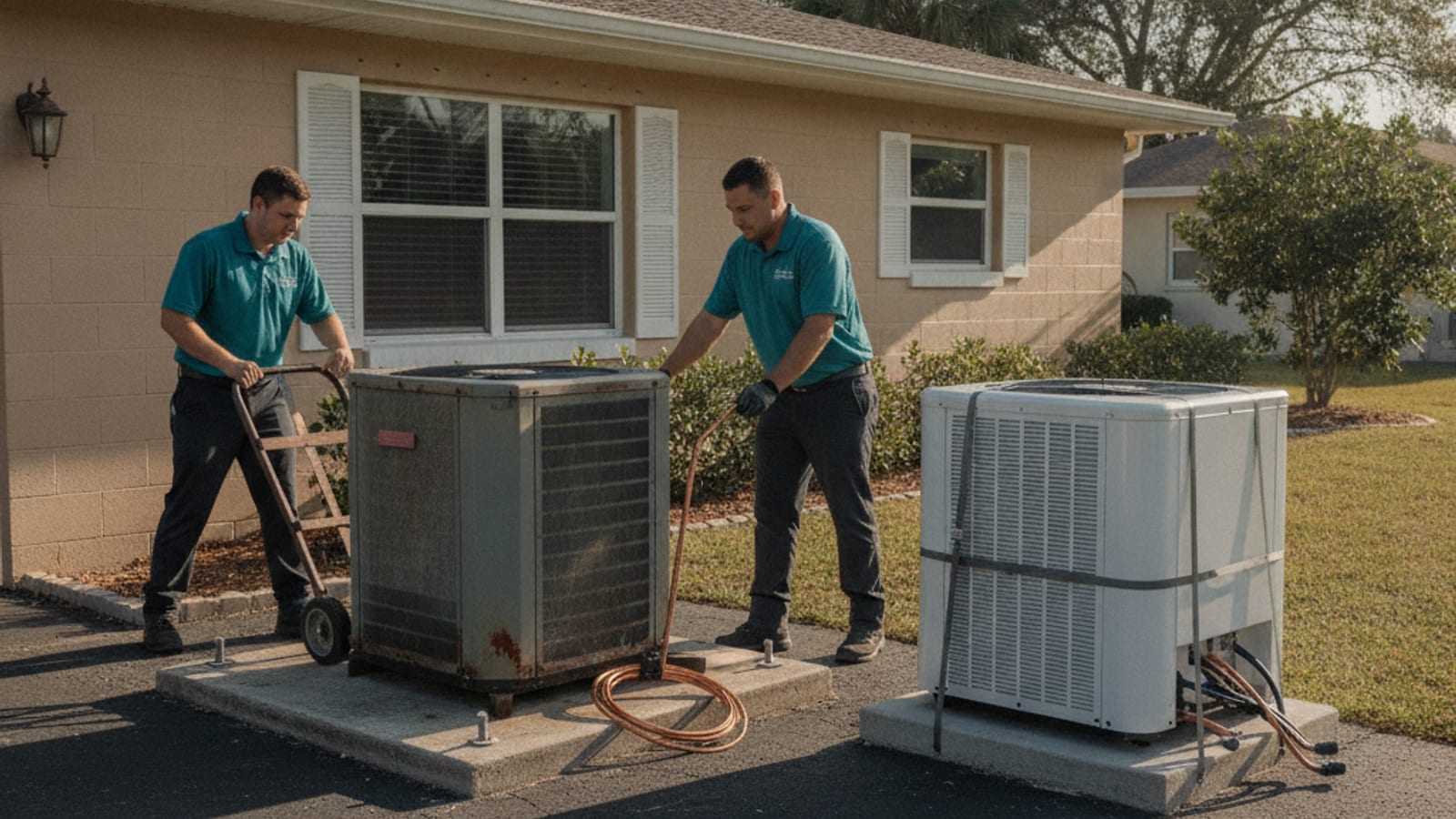
A full AC system replacement in Englewood runs $5,500 to $12,000 installed for most single-family homes. A standard split system lands at $5,500 to $8,500. A higher-efficiency variable-speed system runs $9,000 to $12,000. Tonnage, ductwork condition, and permit fees are what actually move a specific quote inside that range.
Englewood Air Pro connects Sarasota and Charlotte county homeowners with local HVAC pros for AC installation, with a free quote that breaks equipment, labor, and permit costs out separately so you know what you’re actually paying for.
What does a full AC replacement cost in Englewood?
A standard single-stage split system, the most common replacement in this metro, runs $5,500 to $8,500 installed. A variable-speed, higher-efficiency system runs $9,000 to $12,000, and it’s worth that premium for homeowners planning to stay in the house long term, since the efficiency gain compounds in a climate where the system runs close to year-round. Line set length, electrical panel work, and permit fees on top of the base install can push either range higher on a more complicated job.
What actually drives the price within that range?
Tonnage is the biggest single factor, and it should come from a real load calculation, not a rule-of-thumb guess based on square footage alone. An oversized AC unit costs more up front and still leaves the house feeling humid, since it cools the air fast without running long enough to pull real moisture out. Ductwork condition matters too: if the existing ducts are leaking or undersized, ductwork repair is its own job, priced at $1,500 to $6,000 depending on scope. That breakdown lives on what ductwork repair costs in Englewood, not inside the AC swap. A new thermostat is often worth adding at the same time, since a proper thermostat installation is what actually lets a new system’s efficiency features do their job.
Does a heat pump cost more than a standard AC replacement?
Slightly more up front in most cases, but a heat pump has become the standard recommendation across this metro rather than a premium upsell, since it handles the rare cold snap without needing a separate heat source. Our post on why heat pumps are the default system in Englewood covers the full reasoning if you’re weighing the two options.
Does replacing near the coast cost more?
Usually, yes, by a modest amount. Homes within a few miles of the Gulf, in places like Manasota Key and Boca Grande, hold up longer with a coated or marine-grade condenser coil, since standard equipment corrodes fast in salt air. That upgrade adds a modest amount to the install cost. Price it into the quote from the start rather than adding it after the first corrosion-related repair.
Can a new AC system help with a 4-point insurance inspection?
Often, yes. Florida insurers use a 4-point inspection to flag aging or visibly corroded HVAC equipment on older policies, and a documented new install with the manufacturer’s rating and install date usually clears that flag. Ask your insurance agent exactly what the inspection requires before scheduling, since requirements vary by carrier.
Is insurance-driven replacement priced differently after storm damage?
Not in terms of the equipment itself. A storm-damaged system still gets quoted the same way, based on tonnage, ductwork condition, and equipment tier, though the process often involves matching a contractor’s scope of work to an adjuster’s claim documentation. Our post on post-Ian AC replacement covers what that process actually looks like for homes in Port Charlotte and Punta Gorda.
How do rebates and tax credits affect the final cost?
FPL runs efficiency-related programs from time to time, but terms and amounts change, so confirm what’s actually available directly with FPL or your contractor at the time of your quote rather than assuming a number in advance.
Is new construction priced differently than a replacement?
Somewhat. New-construction installs in growing areas like North Port’s Wellen Park district often land in a similar range to a standard replacement, $5,500 to $12,000 for most single-family homes, but the equipment is frequently bundled into a broader builder contract rather than quoted as a standalone project. Builder-grade equipment isn’t always sized to a home’s actual humidity load, so a load calculation matters just as much on a new build as it does on an aging-system swap. A post-warranty inspection once the builder’s coverage expires is worth scheduling either way, since it’s the first real chance for an independent technician to confirm the original install was sized correctly.
What should you get in writing before agreeing to a replacement quote?
A written quote should break out equipment cost, labor, and permit fees separately rather than presenting one bundled number, so you can see exactly what you’re paying for and compare quotes apples to apples. It should also specify the exact equipment tonnage and efficiency rating being installed, not just a brand name, since two systems from the same manufacturer can carry meaningfully different price tags and performance. Ask whether the quote includes disposal of the old system and refrigerant reclamation, since both are standard parts of the job but worth confirming aren’t billed as a surprise add-on afterward. The permit line is worth understanding before you sign, because an AC replacement permit is required in Englewood no matter what the job costs, and Florida changed the review timeline on July 1, 2026.
Frequently asked questions
How much does a new AC system cost in Englewood?
A standard split system runs $5,500 to $8,500 installed in most Englewood-area homes, and higher-efficiency variable-speed systems run $9,000 to $12,000. The final number depends on tonnage, ductwork condition, and any electrical or permit work the job requires.
What size AC system does my home actually need?
Usually smaller than a rule-of-thumb guess suggests. A proper load calculation accounts for square footage, insulation, window type, and orientation, since an oversized system short-cycles and leaves the house humid even while it cools. Right-sizing affects comfort more than almost any other decision in the install.
Is it worth paying more for a coastal-rated condenser?
For homes within a few miles of the Gulf or a bay, yes. A coated coil and marine-grade cabinet cost more up front but hold up meaningfully longer against salt air than standard equipment, which often avoids paying for a second replacement within a decade.
How long does a full AC replacement take?
Most single-system replacements finish in a single day, assuming no major electrical or ductwork issues turn up once the crew is on site. A more involved job, like one requiring duct replacement or a panel upgrade, can run into a second day.
Does replacing my AC affect my homeowners insurance?
It can help. A documented, professionally installed system with a current rating and install date is often what clears an HVAC-related flag on a Florida 4-point inspection. Check with your specific insurer about what documentation they require before or after the install.
How do I verify a contractor is licensed for HVAC installation in Florida?
Florida requires a CAC (air conditioning and refrigeration contractor) license for this work, and you can verify any contractor’s license class and standing for free at myfloridalicense.com before signing a contract. We connect Englewood homeowners with experienced, insured local HVAC pros, and we’d rather you check than take anyone’s word for it, ours included.
If your system needs replacing, call (941) 292-6250 and we’ll connect you with a local HVAC pro who runs a real load calculation and gives you a written, itemized quote.