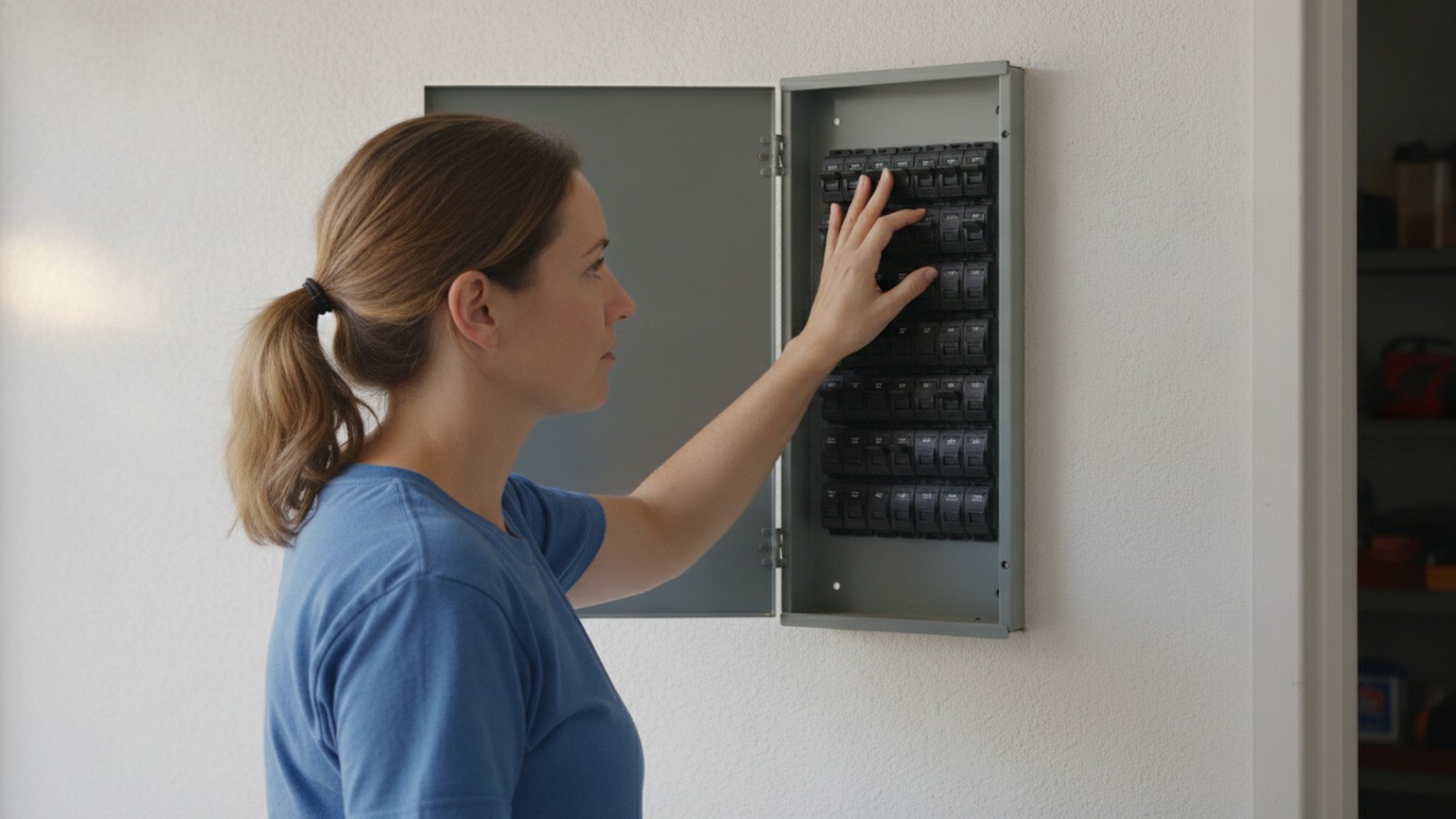
Shut the system off at the breaker and leave it off. A burning smell from air conditioner equipment during cooling can signal overheating or an electrical problem. The narrow exception is a brief dust odor during the first heating cycle of winter. That exception doesn’t apply while the system is cooling.
What should I do when my AC smells like burning?
Turn the air conditioner off at the breaker immediately. Don’t open the air handler, condenser, or electrical panel. Don’t sniff around components while trying to locate the source.
If the breaker already tripped, don’t keep resetting it. A repeated trip means the breaker is protecting the system from a fault. The AC breaker troubleshooting guide explains why repeated resets can cause more damage.
Call for emergency HVAC service if the odor continues. A burning or plastic smell from the air handler or condenser is an emergency symptom. The same applies when visible damage surrounds the outdoor unit.
Englewood Air Pro connects homeowners with licensed and insured HVAC professionals. The assigned provider diagnoses the equipment and gives the authoritative written quote. Call (941) 292-6250 to request a local technician.
Which burning smells are actually dangerous?
A burning or melting-plastic odor during cooling requires immediate attention. Carrier’s consumer guidance states, “A burning smell often suggests overheating mechanics, a compromised motor, or an electrical wiring issue.” Carrier also describes that condition as requiring immediate professional attention.
A burning or plastic smell from the air handler or condenser usually means a component is overheating. The common culprits are a failing motor or an electrical connection.
That doesn’t mean homeowners should identify the failed component themselves. Different failures can create similar odors without visible damage. The safe decision depends on operating mode and accompanying symptoms.
| What is happening | What it can indicate | What to do |
|---|---|---|
| Burning or plastic odor during cooling | Overheating motor or electrical connection | Shut the system off at the breaker |
| Outdoor unit feels unusually hot and smells burned | Struggling compressor or electrical problem | Shut it off and request service |
| Breaker trips when the AC starts | Compressor, motor, capacitor, or wiring fault | Stop resetting it and request service |
| Visible damage appears at the condenser | Emergency equipment damage | Leave the system off and call |
| Brief dusty odor during the first winter heating cycle | Dust heating after months of inactivity | Follow the limited heating guidance below |
| Heating odor persists or worsens | A condition beyond normal dust burn-off | Shut the system off and request service |
A compressor housing can feel warm during normal operation. Heat becomes concerning when the unit is uncomfortable to touch. Unusual noise or a burning smell makes that warning stronger.
An AC that runs without cooling presents a different symptom pattern. The Englewood AC not cooling guide covers frozen coils, water pooling, and cooling failures. A burning odor changes the response because it introduces an electrical risk.
When is a burning smell harmless?
The limited harmless case happens during heating startup, not cooling. Dust can collect while the heating side remains inactive. That dust may create a temporary odor during the first winter cycle.
Trane’s heating guidance says to “let the unit run for about 10 minutes” when dust appears responsible. If the odor persists or worsens, Trane directs homeowners to shut the unit off. This guidance concerns heating equipment starting after seasonal inactivity.
The same narrow situation can apply to an Englewood heat pump. Its heating side may sit unused between cold mornings. Electric backup strip heat can also energize after months without operating.
One Goodman heat-kit manual shows how that equipment is protected. Its control panel is “equipped with all of the safety circuit/limits required per UL1995.” The wiring legend names primary and secondary limit switches.
That document covers one Goodman heat-kit family. It doesn’t describe every system installed in Englewood. Those internal safeguards also don’t make a persistent odor safe.
Only consider dust burn-off when every condition below applies:
- The thermostat has just switched into heating mode.
- This is the first heating cycle after months of inactivity.
- The odor smells dusty rather than like melting plastic.
- The odor clearly diminishes within about 10 minutes.
- No breaker trips, unusual noise, or visible damage appears.
A burning odor during cooling doesn’t fit this exception. Neither does an odor that becomes stronger while heating. Shut the equipment off when either condition occurs.
Why does Englewood’s cooling season change the answer?
Englewood’s cooling season runs about nine months each year. Most local homes use heat pumps instead of separate gas furnaces. Cooling operation therefore provides the correct context for much of the year.
The seasonal dust explanation belongs to a different operating mode. It applies during the handful of cold winter mornings. Local temperatures can reach the 30s and 40s during those periods.
That distinction matters because heating-focused guidance like Trane’s is written around furnace startup after months of inactivity. Englewood homeowners may read that advice while their systems are cooling. Waiting ten minutes during cooling applies heating guidance to the wrong condition.
Use this simple decision:
- Cooling mode plus a burning smell means immediate shutdown.
- First winter heating cycle allows the narrow dust exception.
- A persistent or worsening heating odor means immediate shutdown.
- A tripped breaker means stop resetting and request service.
The Englewood heat pump guide explains how one system handles both seasons. Homeowners can also review the local Englewood HVAC service area before requesting a referral.
Why does salt air affect coastal AC electrical parts?
Salt-laden moisture can enter outdoor electrical connections near the coast. Standard condenser cabinets don’t completely seal contacts and control components from that exposure. Corrosion can then affect the connections inside the unit.
This pattern matters around Manasota Key and Boca Grande. It also affects other properties exposed to coastal air. The salt-air AC protection guide covers these local failure points in greater detail.
Network repair requests since Hurricane Ian have included corroded electrical connections. They have also included coil damage linked to storm surge and flooding. Those problems have been especially relevant around Port Charlotte and Punta Gorda.
A burned odor doesn’t prove corrosion caused the failure. It does make the coastal operating environment relevant during diagnosis. The technician must inspect the system rather than guessing from smell alone.
What does a repair visit look like and cost?
The assigned HVAC professional first identifies the failed component or connection. The provider then gives the applicable price, warranty, and service terms. Any written quote from that provider becomes the authoritative price.
Here’s what this work runs in Englewood:
| Service | Published range |
|---|---|
| AC diagnostic | $89-$150 |
| Most AC repairs | $150-$650 |
| Emergency dispatch and diagnostic | $200-$450 |
Motor replacements fall toward the higher end of the repair range. The actual price depends on the diagnosed failure and assigned provider.
Most standard jobs receive a free quote after system inspection. Troubleshooting an intermittent problem may carry a diagnostic fee. The provider states that fee before work begins. It is applied toward the repair when the homeowner proceeds.
Use AC repair service for a system that remains safely off. Request emergency service when the odor accompanies overheating, visible damage, or breaker trouble. Afterward, ask whether HVAC maintenance fits the repaired system.
Frequently asked questions
Why is there a burning smell coming from my AC vents?
A burning smell coming from AC vents during cooling is treated the same as a burning smell at the equipment: shut the system off at the breaker and leave it off. The odor is traveling through the ductwork. It does not change the shutdown rule or the narrow first-heat dust exception.
Is a burning smell from my air conditioner an emergency?
Yes, treat a burning smell during cooling as an emergency. Shut the system off at the breaker and leave it off. Then request help from a licensed HVAC professional.
Why does my AC smell like burning plastic?
A plastic odor can indicate an overheating component or electrical connection. It can become a fire risk inside an air handler closet or attic. Don’t open the equipment or keep running it for observation.
Can dust cause a burning smell from my heat pump?
Yes, but only during the limited heating-startup situation. Dust may heat when the system’s heating side first starts after months of inactivity. The odor should diminish within about 10 minutes, not persist or worsen.
What if the burning smell appears with a tripped breaker?
Leave the system off and stop resetting the breaker. The trip can indicate a compressor, motor, capacitor, wiring, or connection fault. That combination warrants prompt professional diagnosis.
Is a musty AC smell the same problem?
No, a musty odor points toward a moisture or air-quality problem. It doesn’t share the same immediate electrical warning as burning plastic. The Port Charlotte indoor air-quality guide covers moisture, coils, and humidity concerns.
How much does burning-smell AC repair cost?
A diagnostic runs $89-$150, while most repairs cost $150-$650. Motor replacements fall toward the higher end of that range. Emergency dispatch and diagnostic service runs $200-$450.
For a burning smell during cooling, shut off the breaker first. Call Englewood Air Pro at (941) 292-6250 for a referral to a licensed and insured local HVAC professional.