Venice sits on an island, and salt air changes everything about how ducts behave. The outdoor air touches your system constantly, moisture gets inside the attic through every vent and opening, and metal ductwork corrodes from the inside out even when it’s sealed tight on the outside. Most air duct problems in Venice start small, a pinhole leak or a separating joint, and grow over months of salt-mist exposure. Catching one early saves money and keeps your AC from working twice as hard just to cool a home where the conditioned air leaks out before it reaches the room.
Englewood Air Pro connects Venice homeowners with local HVAC pros for ductwork repair and replacement. The barrier island challenge isn’t just diagnosis, it’s logistics. Service calls to Venice Island take longer, parts have to be staged for ferry pickup, and duct replacement means materials have to be transported to the island. Here’s how to tell a repair from a replacement, and when to call.
Why does salt air corrode ductwork faster in Venice than Englewood?
Venice Island sits in the Gulf of Mexico. The salt spray off the water doesn’t just eat paint and aluminum. It creeps into attics through soffit vents, ridge vents, and any opening that can’t be sealed. Metal ductwork, whether galvanized steel or aluminum, starts corroding from moisture and salt-mist exposure the moment it’s installed. On the mainland, ducts have years before salt air becomes an issue. On Venice Island, the corrosion timeline compresses.
Flexible ductwork insulation traps moisture against the outer vapor barrier. When that barrier has a pinhole or a seam that’s separated, moisture gets between the insulation and the metal core. Trapped moisture and salt air accelerate corrosion, and the metal weakens. A duct that’s lasted 30 years in Port Charlotte might only last 20 on Venice Island, and faster once a leak develops.
Galvanized-steel ducts fare better than uncoated aluminum, but both corrode. The best defense is a sealed attic, which Venice homes rarely have. Most have soffit vents for attic ventilation, sump vents for the crawl space, and dryer vents that let salt-laden outside air flow through the attic every time the AC runs or the dryer tumbles.
What does a duct leak sound like in a Venice home?
A small leak starts as a whistle, a soft hiss from the supply ductwork during cooling. The air pressure inside the duct is about 0.5 inches of water column higher than the attic, so when a hole forms, air escapes audibly. The whistle changes pitch if you walk around the attic, which helps a technician locate the leak once they’re up there with a flashlight.
A bigger leak sounds like a rush or roar, especially during the hottest part of the day when the system cycles hard. That roar is cooled air escaping into the attic instead of reaching the rooms. Your AC runs longer to compensate, and your electric bill rises before your comfort really drops.
A separated joint at a duct boot or branch makes a flutter or rattle, not a steady tone. The pressure difference causes the duct to vibrate against the attic framing or adjacent ducts. That sound is a sign the mastic sealant that held the joint has failed, usually from vibration or from salt-air corrosion of the metal connectors.
How big does a duct leak have to be before you notice it in cooling cost?
A pinhole leak, the size of a nail, costs you about $20 to $40 a month in extra AC runtime during cooling season. A dime-sized hole costs closer to $50 to $100 a month. A duct boot that’s separated by a half-inch gap can cost $150 to $250 a month if it’s on a main supply trunk. Those numbers vary by your electricity rate and your setpoint, but the pattern is consistent: small leaks cost money faster than most homeowners realize.
Venice’s salt air accelerates the leak growth. A pinhole that might stay small for a year on the mainland can grow to a quarter-inch or larger within months on the island as corrosion weakens the metal around the hole.
When does a duct leak become a replacement instead of a repair?
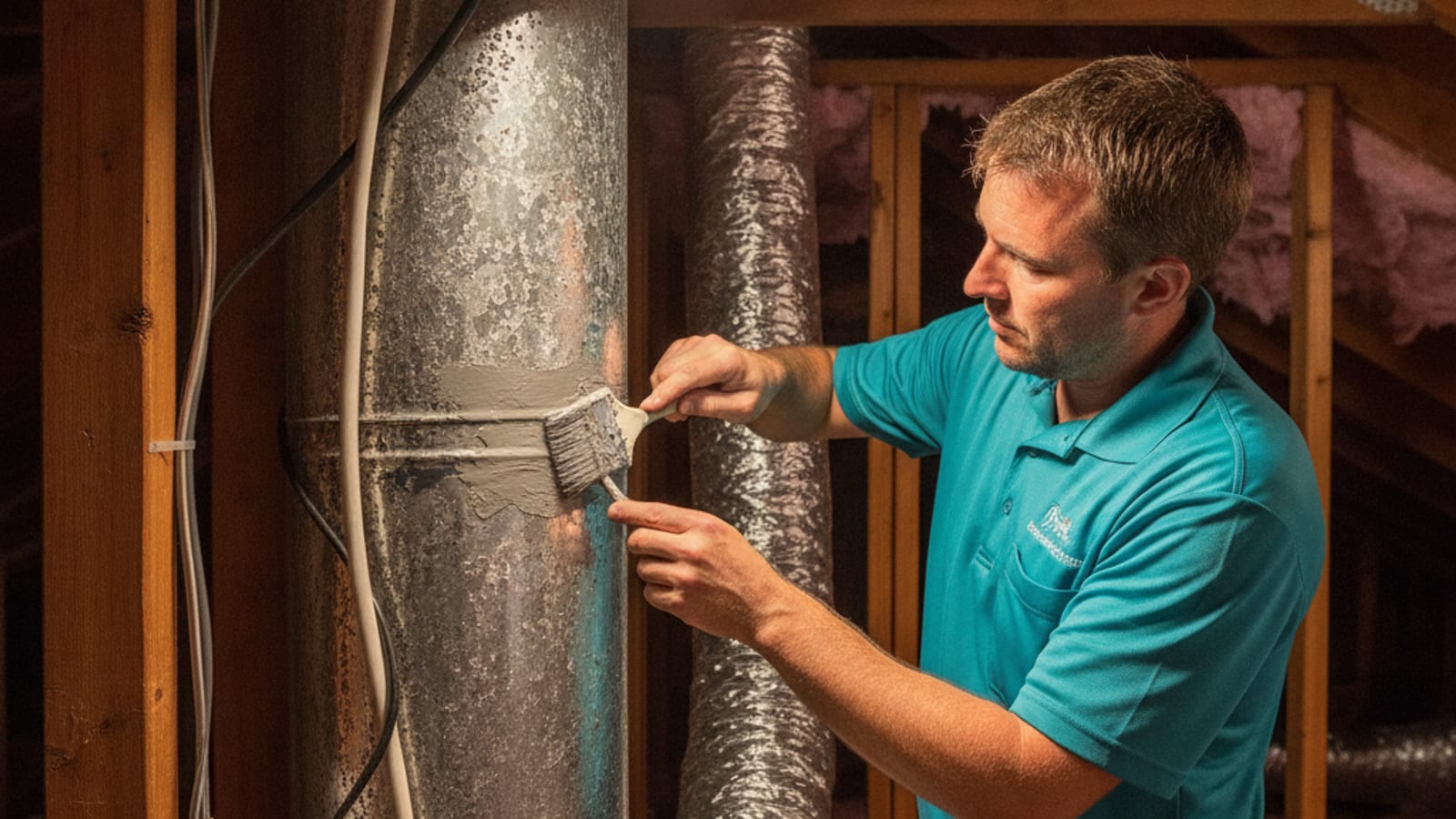
A sealed leak with mastic and reinforcing mesh, done in the attic, costs $150 to $400 depending on how many joints need attention and how easy they are to reach. Most accessible duct leaks fall into this category.
A duct section that’s crushed, kinked, or so corroded that sealing won’t hold is a replacement. If the insulation is saturated with moisture or the metal is pitted with rust holes, mastic won’t seal a failing system. A single 4-foot section of ductwork runs $200 to $600 to replace, depending on its type and size. A full supply trunk replacement can run $2,000 to $6,000.
In Venice, where material and labor logistics add time and cost, a replacement job that might run $3,500 on the mainland can run $4,500 on the island. Not because the work is harder, but because the ferry schedule constrains when the crew can stage materials and when they can reach the job.
How do you know if you have a duct leak versus low refrigerant or a thermostat problem?
Three different failures can make your AC run but not cool. Low refrigerant, a failed capacitor, or a leaking duct system all leave your house warm.
If the leak is in the supply ductwork, the air coming out of your registers feels cool but weak. You might feel a small amount of cold air if you hold your hand near the vent, but the room doesn’t cool evenly. Rooms farther from the air handler cool slower or not at all. The system sounds normal but the output is sparse.
Low refrigerant usually feels different. The air coming from the supply vents is cold, sometimes very cold, but the house never reaches setpoint no matter how long the system runs. You might also see ice forming on the evaporator coil where the condensate line is, or a hissing sound near the outdoor unit if there’s an active leak.
A thermostat problem means the system doesn’t run at all, or it cycles on and off in a pattern that doesn’t track your setpoint. The control display might be unresponsive or the batteries might be dead.
The diagnostic check, done by a licensed tech with a duct blower or smoke test, finds a leak quickly. The cost is $89 to $150, and you’ll know exactly what you’re dealing with before any repair work starts.
What’s the timeline for a Venice duct repair versus replacement?
A duct seal on accessible ductwork, same-day service. The technician finds the leak, dries the area with a heat gun or by letting the AC run, applies mastic, reinforces with mesh if needed, and waits for the sealant to set. Total time in the attic, about 30 to 90 minutes depending on how many leaks there are.
A single-section replacement, one visit. The crew shuts the system down, removes the damaged section, installs the replacement, reconnects the joints with mastic and clamps, and tests the airflow before leaving.
A full trunk replacement on the island takes longer because material procurement and ferry logistics add days. A mainland job might start and finish in a single week. A Venice job often starts on the mainland, materials arrive on the ferry, and the work happens over a week or two depending on the ferry schedule and crew availability.
If your AC isn’t cooling and a duct leak is confirmed, waiting a few weeks for a full replacement is hard. Most homeowners opt for an emergency seal on the worst leaks while planning a full replacement later. That keeps the home cool enough to live in while you schedule the permanent fix.
When should you call for duct repair today?
Call the same day if: the room-by-room temperature varies wildly even on low setpoint, the supply vents are noticeably weak compared to previous years, you can hear a whistle or roar in the attic during AC runtime, or the electric bill jumped without any change in how you’re using the AC.
A duct leak that’s been there for weeks can wait until later this week to call. The system is still running, still cooling, just working harder than it should. Schedule the diagnostic on a cooler day, not the hottest day of the month when every technician is booked solid.
Venice’s barrier island location means a duct problem can escalate quickly once salt air starts working on corroded metal. What looks like a small leak today can become multiple leaks within months. Catching it early, even with a temporary seal, prevents the domino effect.
Frequently asked questions
How long does a duct repair take?
Most mastic seals finish within one to two hours. A single-section replacement takes two to four hours. A full duct replacement can take a full day or stretch across two visits depending on the scope and the system complexity.
Can I seal a duct leak myself?
You can apply duct mastic to an accessible leak if you’re comfortable in an attic. Brush-on mastic, available at hardware stores, works fine for small holes. For a lasting repair, measure the leak first and apply reinforcing mesh over the hole before the mastic sets. Let the sealant cure fully before running the AC hard. For anything larger than a quarter-inch or on inaccessible ducts, hire a licensed technician. Wrong technique can make the problem worse.
Does duct sealing improve air quality?
Sealed ducts keep dirt and attic contaminants from being pulled into the return air and circulated into your home. If your attic is dusty or your return-air vents are unsealed, sealing the supply-side leaks helps but doesn’t solve the full picture. Return-side sealing is equally important.
What’s the difference between a duct repair and duct cleaning?
Repair fixes leaks. Cleaning removes dust, mold spores, and debris from inside the ductwork. Many older homes on Venice Island need both, especially if the system has never been professionally cleaned. A combo job, cleaning followed by sealing, runs $400 to $1,000 for accessible ducts.
Will a duct repair affect my AC warranty?
No. Ductwork repair is separate from the AC unit and carries its own warranty from the HVAC contractor. The air conditioner itself remains under its manufacturer’s warranty, assuming a licensed tech did the work and used approved methods.