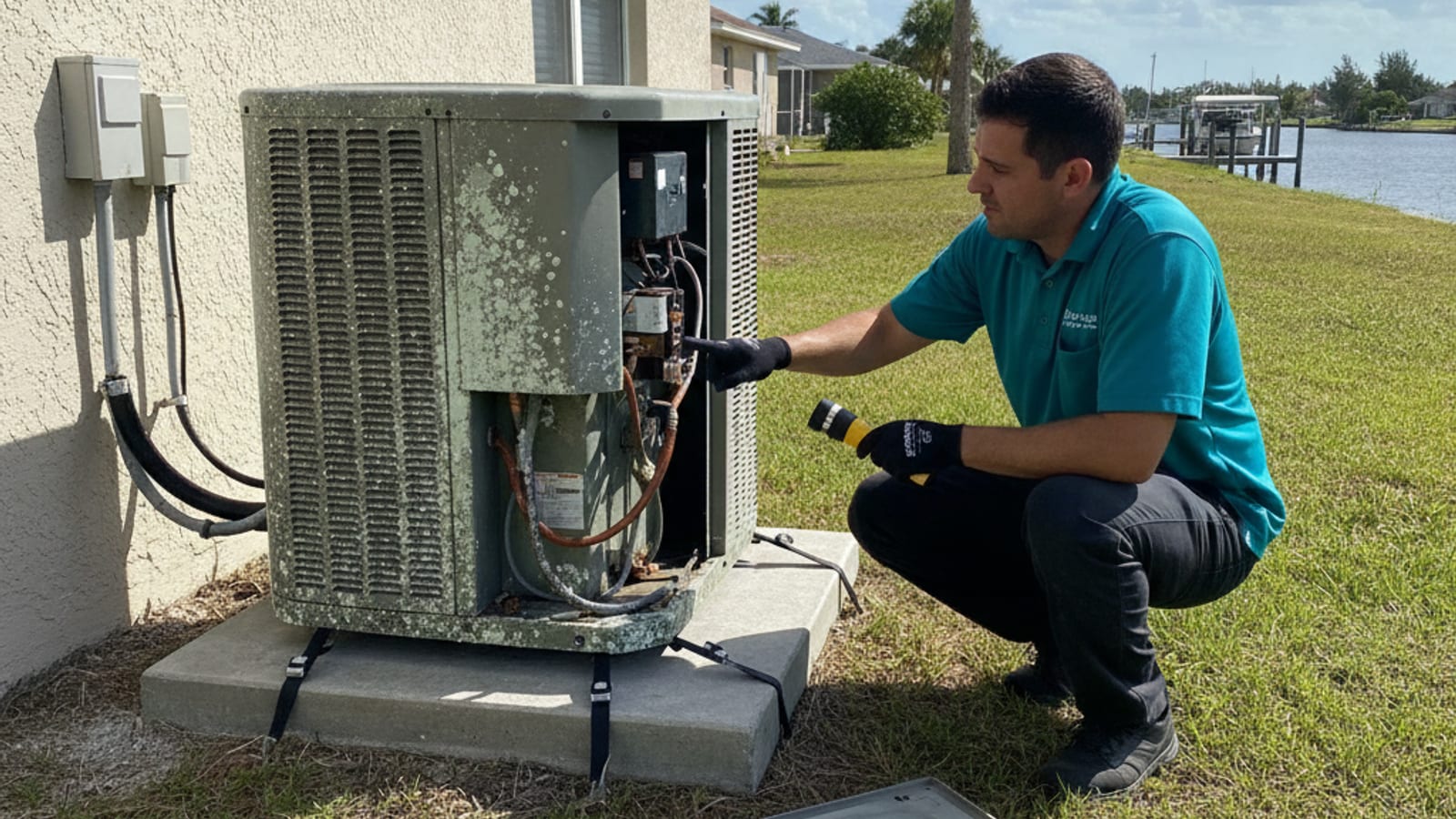
Osprey AC units face the same punishing schedule as anywhere else on the Gulf coast. Salt air off the water corrodes outdoor connections, nine months of cooling season that barely pauses, and the kind of humidity that makes a struggling air conditioner feel like a personal crisis by mid-afternoon. Most repair calls in Osprey come down to something straightforward. A dirty air filter, a tripped safety switch, a failed run capacitor. None of those need a full replacement, and a technician can usually have the system running again the same day. But knowing what warrants a call right now versus what you can address later means the difference between a quick fix and waking up to a house that’s hit 88 degrees before noon.
Englewood Air Pro connects homeowners across Sarasota and Charlotte counties, including the Osprey area, with local HVAC pros for air conditioning repair. The first step is always reading what your AC is telling you. Here’s how to separate a minor issue from something that needs immediate attention.
What does AC repair cost in Osprey?
A diagnostic in Osprey runs $89 to $150. Most repairs then run $150 to $650 for parts and labor. The assigned provider’s written quote is the price for that job.
Your AC is running but not cooling
This is the most common reason people call for help. The system sounds normal, the fan moves air, the compressor hums along, but the house just isn’t getting cold. That usually points to something inside the refrigeration system, not a simple electrical problem.
Three things commonly cause this in Osprey homes. A failed run capacitor, the small cylindrical part in the outdoor electrical box, wears down after nine months of near-continuous operation. The salt air off the water accelerates corrosion on the terminals, weakening electrical connections long before the capacitor itself dies. Low refrigerant from a slow leak reduces the system’s ability to pull heat out of your home even though it keeps running. Or a frozen evaporator coil, usually from restricted airflow or a low refrigerant charge, has gotten too cold to work properly.
The right move here is to shut the system off at the thermostat right now. Running a refrigeration system when it can’t remove heat can damage the compressor further. Turn the fan to run without cooling and let any ice thaw completely. Then call for a diagnostic visit, which typically runs between $89 and $150. That diagnostic is where you get real answers, not guesses.
Your AC trips the breaker every time it starts
This deserves immediate attention. A breaker that trips on startup means the compressor or fan motor is pulling far more current than it should, usually because a failed capacitor is forcing the motor to work too hard just to turn on. It can also signal a wiring or electrical connection problem, which happens faster in Osprey’s salt air environment where exposed connections corrode.
Resetting the breaker repeatedly without finding the cause risks serious damage to the compressor. If the trip comes with any burning smell from the outdoor unit or visible arcing inside the electrical box, leave the system off entirely and call for emergency HVAC service the same day. The assigned technician can confirm what’s seized and order parts if needed.
You see water pooling near your indoor unit
Standing water near the air handler usually means a clogged condensate drain line or a tripped float switch, the safety device that shuts the system down before water overflows and damages your home. In Osprey’s humid climate, condensate lines clog with algae and debris faster than in drier regions. A routine maintenance visit includes flushing that line as standard work.
If the float switch has already tripped, the system is off by design and doing its job. That’s the safety system working as intended. A technician can clear the line in under an hour most of the time, billed as a diagnostic at $89 to $150 or as a repair in the $150 to $650 band depending on what they find. Letting it sit, though, means the system stays off and your interior humidity starts climbing within hours in this heat.
Your outdoor fan won’t spin even though the unit is humming
A humming outdoor unit with a fan blade that won’t turn usually means a failed run capacitor or a seized fan motor bearing. This is one of the more pressing repair situations because the compressor can overheat and take further damage if it keeps running without the fan cooling the condenser coil. Osprey’s salt air can also cause the fan blades themselves to seize if they’re not maintained regularly.
Shut the system off at the thermostat and call for service. The assigned technician can confirm what’s seized and get you sorted. A capacitor replacement is often finished on the first visit. A motor replacement might need a later visit if the part has to be ordered.
Your electric bill jumped for no obvious reason
Often the electric bill jumps before you even feel a comfort problem. A system that’s losing refrigerant or fighting restricted airflow runs longer to reach the same temperature, which shows up on the electric bill first. If your bill spiked with no real change in how you’re running the AC, it’s worth a diagnostic even if the house still feels reasonably cool.
Catching a slow refrigerant leak or a drifting charge before the house actually feels warm is almost always cheaper than waiting for a full no-cool emergency in August. The system is working harder each day, costing more, and getting closer to a bigger failure.
Your thermostat isn’t responding or the schedule keeps resetting
Sometimes what looks like an AC problem is actually a thermostat problem. A miswired thermostat, a dead battery in a battery-backed model, or a thermostat that lost its program after a power blip can all make a perfectly healthy AC system seem broken.
Check that the thermostat display is responding and the setpoint is actually below the current room temperature. If the display is dark or the buttons don’t react, replace the batteries first if it’s a battery model. If that doesn’t help, or if the wiring looks unfamiliar or the system was recently upgraded, a thermostat check can confirm whether the issue is the thermostat or the AC itself.
When should you call right now versus when can you wait?
Call the same day for: a breaker that trips when the AC starts, a burning smell from the outdoor unit, the outdoor fan not spinning at all, the compressor not running, a refrigerant leak you can actually see dripping, or visible water pooling inside or around the air handler.
Can wait until tomorrow or later this week: a dirty air filter, a condensate drain line clog (assuming the float switch tripped and shut off the system), a low refrigerant charge without visible signs of leaking, or a failed capacitor discovered during a routine maintenance visit.
The Osprey summer doesn’t forgive delays. A system that’s not cooling today will make the house uncomfortable by tomorrow afternoon, and trying to find an available technician on the hottest day of August is how people end up without AC when they need it most. If something’s wrong, call while there’s still capacity in the local technician schedule.
Frequently asked questions
How long does an AC repair typically take?
A simple repair like a capacitor replacement or a condensate drain clear usually takes one to two hours. A refrigerant leak diagnosis and repair, or a motor replacement that needs a part order, might stretch into a second visit. The diagnostic visit itself runs 30 to 60 minutes. Licensed techs in the network show up in a two-hour window.
Should I try to fix my AC myself?
No. AC systems contain refrigerant under high pressure, which is toxic and requires a federal EPA license to handle. Ductwork, electrical connections, and motor issues all involve either electrical hazard or physical risk. Hire a licensed pro. The diagnostic cost is worth not accidentally making things worse.
How do I know if my AC needs repair or replacement?
A system that’s 15 years or older and breaks down is often getting close to replacement. A system that’s 8 to 12 years old and has one repair is almost always worth fixing. A system that’s less than 8 years old and has never needed repair can often keep running with regular maintenance. The assigned technician can tell you whether a repair will hold.
Can I prevent AC repair calls?
Yes, partially. A yearly maintenance visit in spring catches a weak capacitor, a drifting refrigerant charge, or clogged drain lines before any of them turn into an emergency. It’s usually cheaper than emergency service in August. Change your air filter every 30 days to keep airflow steady. Keep the outdoor unit clear of debris and vegetation. In Osprey, a post-storm inspection of your outdoor electrical connections can catch corrosion before it causes a breaker trip.
What does an AC repair cost?
Most repairs run $150 to $650 for parts and labor, on top of an $89 to $150 diagnostic fee. The cost depends entirely on what’s actually broken. A capacitor runs low. A refrigerant leak or motor replacement runs higher. A technician will give you a written quote before starting any work, which is standard practice in this market.
If your AC isn’t running right in Osprey, call (941) 292-6250 and we’ll connect you with a local HVAC pro. Licensed techs in the network show up in a two-hour window.