If your AC isn’t working, check the thermostat, electrical panel, air filter, drain line, and outdoor unit. If it still won’t start or cool, shut it down and call a licensed HVAC pro.
Englewood’s heat and Gulf humidity can make an AC failure feel urgent. A few safe checks may reveal a simple problem. They can also help you describe the symptoms clearly when requesting service.
What should I check when my AC stops working?
Start with the controls and visible parts of the system. Don’t remove equipment panels or touch exposed wiring.
- Confirm the thermostat is set to cooling and below the room temperature.
- Replace weak thermostat batteries if the display is blank or fading.
- Check whether the air filter is clogged, wet, or installed backward.
- Look for a tripped breaker without repeatedly resetting it.
- Inspect the outdoor unit for debris, standing water, or obvious damage.
Give the thermostat a short time to send its cooling signal. Some systems delay startup to protect the compressor after an interruption.
If the thermostat uses a schedule, confirm it hasn’t switched to an energy-saving setting. Smart controls can also lose their connection while the HVAC equipment remains powered.
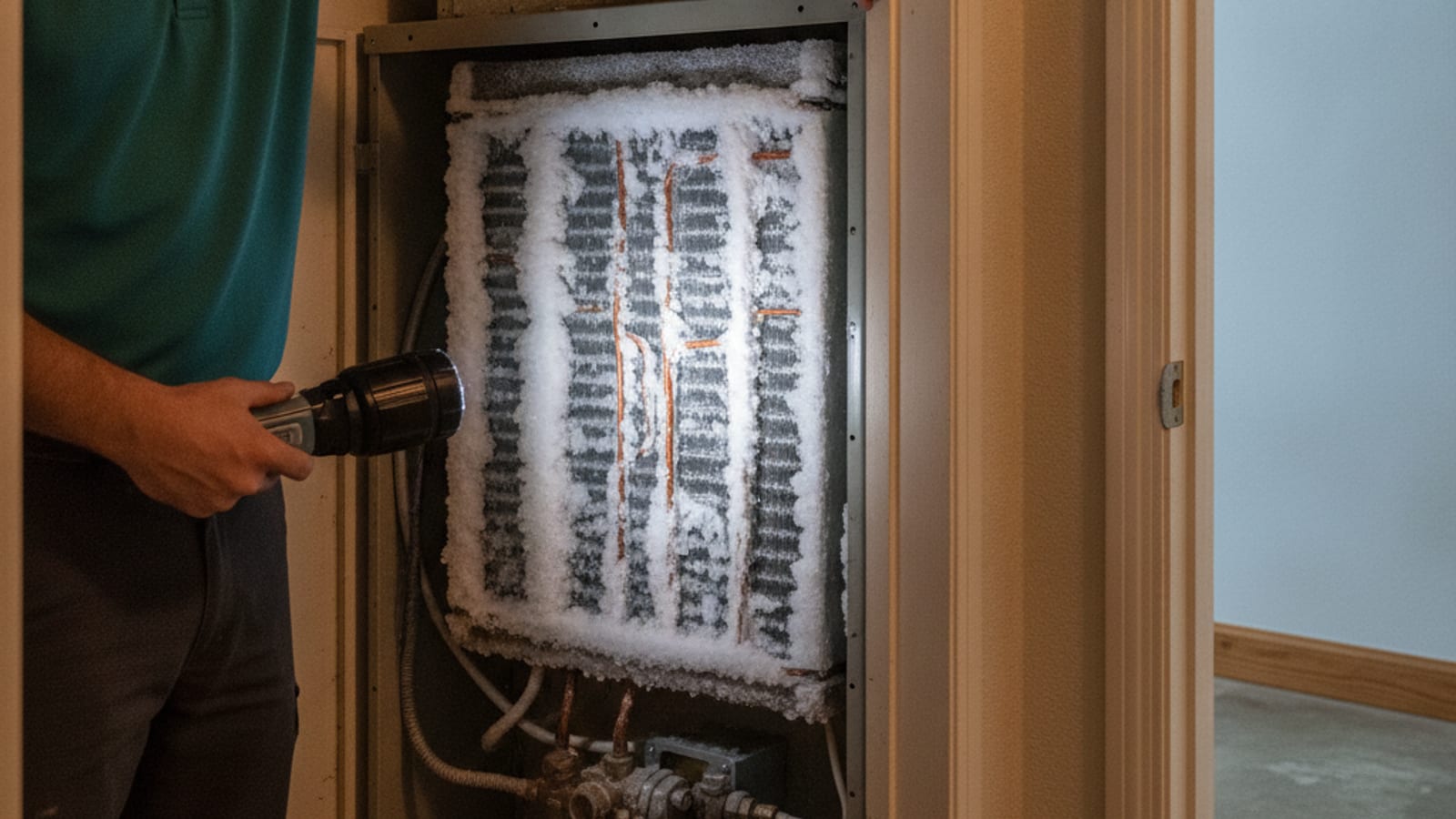
A badly clogged filter restricts airflow across the indoor coil. That can reduce cooling and may cause the coil to freeze. Replace the filter with the correct size, then leave the system off if you see ice.
Why is my thermostat on but the AC isn’t running?
The thermostat may have power even when the cooling equipment doesn’t. The indoor air handler and outdoor condenser often use separate electrical circuits. A tripped breaker, open safety switch, or failed component can stop part of the system.
Check the electrical panel for a breaker sitting outside its normal position. Resetting a breaker may restore power after a brief interruption. If it trips again, leave it off. Repeated resets can expose the system to further damage.
A condensate safety switch can also interrupt cooling. This happens when water backs up in the drain pan or drain line. Florida’s humid air creates plenty of condensation, so drainage problems are common. Don’t bypass the switch. It’s preventing water from overflowing into your home.
If the screen is blank despite fresh batteries, the thermostat may lack system power. The licensed HVAC pros we send can test the controls, safety circuit, and electrical supply. They can also determine whether thermostat installation makes sense or a smaller repair will solve the problem.
Why is the AC running but not cooling the house?
An AC can run without producing enough cool air. Check the temperature and strength of the airflow at a nearby supply vent. Weak airflow points toward a dirty filter, frozen coil, blower problem, or duct restriction.
Warm airflow suggests a different group of problems. The outdoor unit may not be running, the coil may be dirty, or the refrigeration cycle may not be moving heat correctly. Closed supply vents can also disrupt airflow and room comfort.
Look outside while the thermostat calls for cooling. Listen for normal operation without reaching inside the cabinet. If the indoor blower runs but the outdoor unit stays silent, professional testing is appropriate.
Our guide to an AC running without cooling explains these symptoms in more detail. Turn the system off if you notice ice, electrical buzzing, smoke, or a burning odor.
Could a clogged drain stop my AC?
Yes, a clogged condensate drain can stop the AC. Many systems include a float switch that shuts off cooling when water rises too high. This protects ceilings, flooring, and the air handler area.
Look for water around the indoor unit or inside the visible drain pan. A musty smell may also accompany slow drainage. Don’t open sealed equipment or pour harsh chemicals into an unfamiliar line.
A pro can clear the blockage, confirm proper drainage, and test the safety switch. If water has reached nearby materials, drying the area quickly helps limit moisture damage.
When does an AC problem need professional service?
Professional service is appropriate when basic checks don’t restore normal operation. It’s also the safer choice when breakers trip, components buzz, ice returns, or water collects around the equipment.
An HVAC technician can measure electrical power, airflow, temperatures, and refrigeration performance. Those readings separate control problems from mechanical failures. They also help prevent guesswork and unnecessary part replacement.
Englewood Air Pro is a referral service, not the licensed contractor. We match homeowners in Sarasota and Charlotte counties with licensed HVAC pros. The pros we send can diagnose the system and explain available options before work begins.
For a broader preventive review, see what technicians examine during a four-point AC inspection. Regular inspection can reveal worn electrical parts, restricted airflow, and drainage trouble before comfort disappears.
Frequently asked questions
Why did my AC suddenly stop working?
A power interruption, thermostat issue, clogged drain, failed capacitor, or safety switch may have stopped it. Check accessible controls and power first, then request professional diagnosis if it remains off.
Can a dirty air filter make the AC stop?
Yes, severe airflow restriction can cause freezing or trigger protective controls. Replace a dirty filter, but leave the system off until visible ice has fully melted.
Should I reset the AC breaker?
Yes, you can reset it if the panel and surrounding area are dry and safe. If the breaker trips again, stop and call a licensed HVAC pro.
Should I turn off an AC that isn’t cooling?
Yes, turn it off when you see ice, smell burning, hear harsh noises, or find leaking water. Continuing to run it may worsen the underlying problem.
Who can help with an AC not working in Englewood?
Englewood Air Pro can connect you with a licensed local HVAC professional. Call (941) 292-6250 to request help.